
Our quality products and best service will make your business much better.
Professional . Specialized . Experienced
(English)

24
Dec
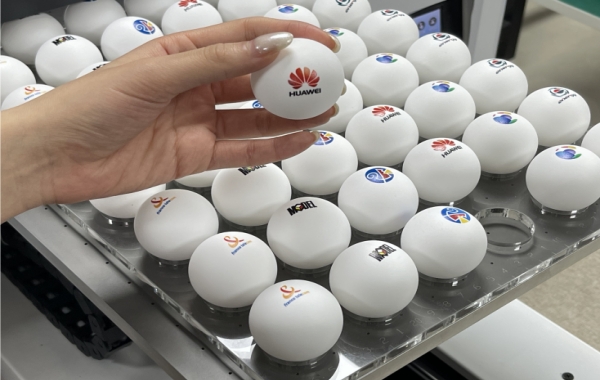
In the world of promotional products and industrial decoration, spherical objects have traditionally posed a challenge for digital printers. However, recent advancements in UV LED Flatbed technology—specifically with precision machines like the TEXTEK UV printer 3040—have turned these challenges into high-profit opportunities.
While many print shops invest in hardware for flat substrates, the ability to print on items like ping-pong balls offers a unique market edge. This article breaks down the technical workflow, economic benefits, and production efficiency of direct-to-sphere UV printing.
A common entry point for spherical printing is the golf ball. However, technical experts have noted that ping-pong balls actually yield superior print results. Surface Texture: Unlike golf balls, which feature dimples that can cause minor ink distortion or "overspray" in the recesses, ping-pong balls provide a smooth, consistent substrate.
Ink Adhesion: The plastic composition of high-quality table tennis balls is highly receptive to UV-curable inks, requiring minimal pretreatment.
Resolution: Because the surface is flat at the point of contact, printers can utilize "Fine Mode" settings (approx. 0.75 inches wide per pass) to achieve crisp, photographic-quality logos.
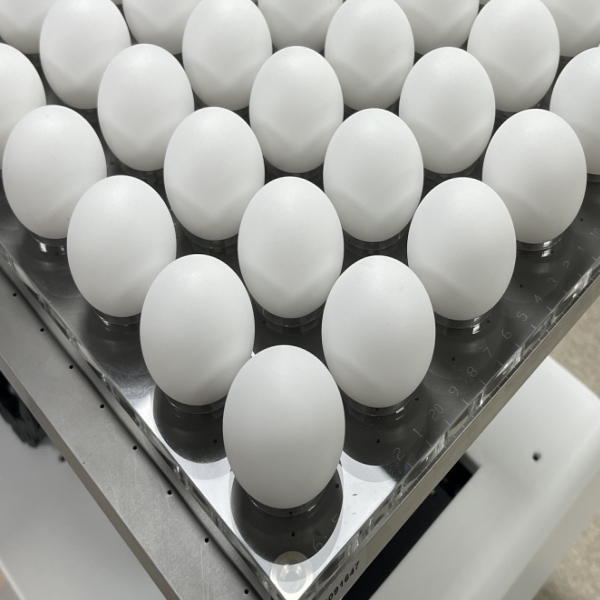
Efficiency in UV printing is largely determined by the fixturing process. To print 20, 40, or 60 balls at once, a specialized "jig" is required.
Interestingly, a standard 60-slot golf ball jig is perfectly compatible with ping-pong balls. These jigs serve as a mechanical coordinate system that aligns perfectly with the printer's RIP (Raster Image Processor) software.
Technical Pro-Tip: To maximize throughput, align your items horizontally across the print bed. Because printhead carriage speed is significantly faster than the bed’s mechanical advance (Y-axis), printing a wide row of items is more time-efficient than printing a long column.
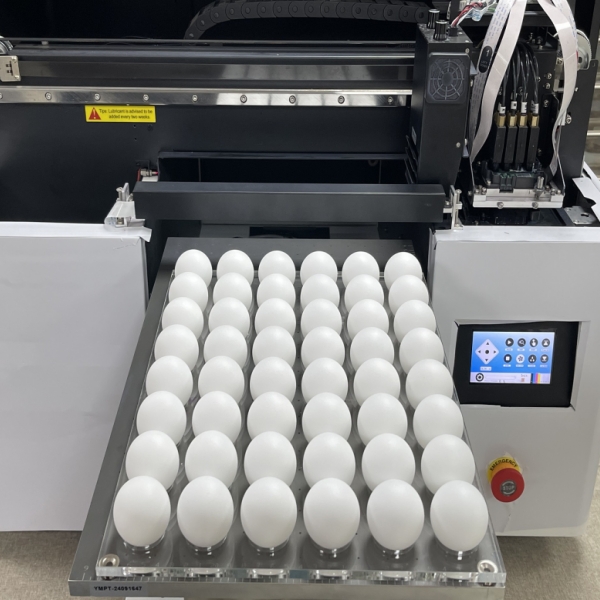
One of the most compelling arguments for UV direct printing on ping-pong balls is the exceptionally low overhead. Based on production runs using the TEXTEK UV printer, the "numbers" reveal a high-margin business model.
| Metric | 20 Ping-Pong Balls | Full Bed (60 Balls) |
| Total Ink Cost | ~$0.0051 (1/2 cent) | ~$0.015 (1.5 cents) |
| Print Time | 2 min 5 sec | ~6.5 minutes |
| Resolution Mode | Fine Mode | Fine Mode |
With an ink cost of roughly $0.00025 per ball, the primary costs are the substrate and labor. In a retail or promotional market where custom-printed balls can sell for $1.00–$3.00 each, the ROI is substantial.
The ability to print on spheres opens doors beyond the sports industry. By utilizing a modular jig system, print shops can pivot between various products:
Corporate & Promotional: Branded ping-pong balls for company events or "swag" bags.
Gaming & Hospitality: Custom numbered balls for Bingo machines or lottery drawings.
Seasonal Decor: Printing "eyeballs" or jack-o'-lantern patterns for Halloween decorations.
Large Format Spheres: By removing alternating balls from a 60-slot jig, the same fixture can be used to hold larger items, such as baseballs or ceramic spheres, provided the printer has sufficient Z-axis (height) clearance.
Direct UV printing on ping-pong balls is a prime example of how specialized tooling can transform a standard flatbed printer into a multi-functional production powerhouse. With negligible ink costs and high-speed output, it is an ideal application for businesses looking to diversify their promotional offerings.


