
Our quality products and best service will make your business much better.
Professional . Specialized . Experienced
(English)

19
Dec
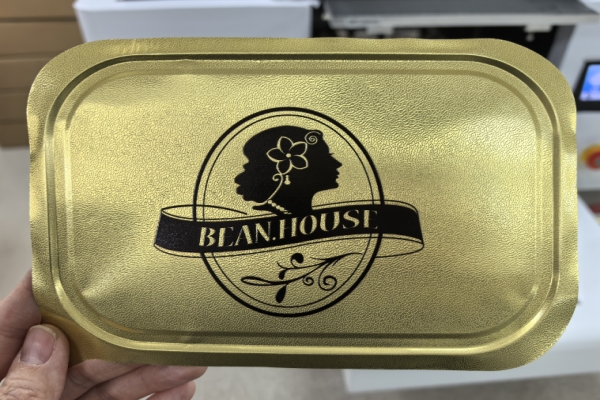
The global food packaging market is undergoing a rapid transformation, driven by demands for sustainability, personalization, and speed-to-market. For brands utilizing aluminum packaging—a highly sustainable material—the limitation of conventional labeling is now obsolete. The advent of Hybrid UV Printing technology allows for high-quality, direct-to-surface customization, fundamentally changing how food brands approach design and production.
Aluminum is a preferred material for takeaway containers, meal kits, and premium food products due to its excellent barrier properties and infinite recyclability. However, traditional decorating methods present significant challenges:
| Method | Disadvantage |
| Pre-printed Stock | High Minimum Order Quantities (MOQs) and inventory complexity. |
| Adhesive Labels | Slow application, susceptible to moisture, and poor quality perception. |
| Hot Stamping/Screen Printing | Expensive setup costs and a lack of personalization capabilities. |
Hybrid UV Printing offers a single, digital solution to overcome these barriers, enabling Mass Customization without compromising material integrity or production speed.
A Hybrid UV Printer combines the flexibility of roll-to-roll (R2R) printing with the rigidity of flatbed printing. This makes it ideally suited for directly handling pre-formed items like aluminum food boxes.
Surface Preparation (Primer): Although not always necessary, an optional digital primer may be jetted onto the non-porous aluminum surface to ensure optimal adhesion and long-term durability of the ink.
Ink Jetting: Specialized UV-curable inks (CMYK, Light Cyan, Light Magenta, and essential White) are jetted directly onto the box surface.
Instant Curing: Immediately after jetting, powerful UV LED lamps cure the ink, instantly transforming it from liquid to solid. This is a cold process, ensuring the aluminum container is not deformed by heat.
Special Effects Layers: The printer can digitally layer inks to create tactile, 3D embossed effects or use the white ink as a crucial base layer to ensure maximum color vibrancy against the reflective metallic surface.
Adopting direct UV printing offers quantifiable benefits that drive sales and operational efficiency for food manufacturers, caterers, and packaging converters.
| Market Advantage | Business Impact |
| Rapid Prototyping | Go from design concept to a finished, printed box in hours, not weeks. |
| Short-Run Profitability | Eliminate fixed tooling costs, making small batches (e.g., 50-100 units) cost-effective for promotional or seasonal campaigns. |
| Personalization | Print variable data (e.g., individual customer names, QR codes, or unique batch numbers) directly onto the packaging. |
| Premium Aesthetic | Achieve seamless, edge-to-edge graphics and tactile finishes that labels cannot replicate, enhancing brand value. |
| Sustainability | Maintain the aluminum's full recyclability by eliminating plastic/paper labels. |
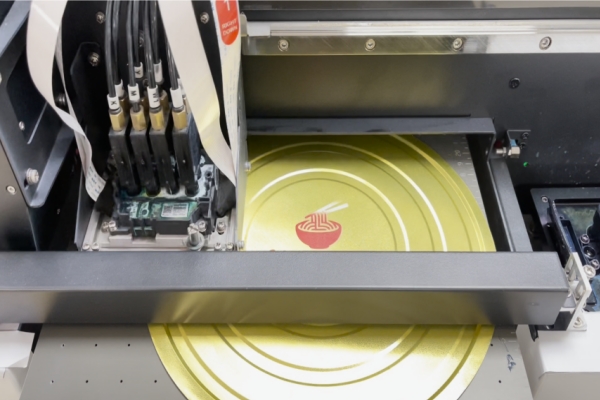
When printing on any food packaging, compliance is non-negotiable. Printers must utilize UV inks that are specifically formulated and certified as Low Migration (LM) inks. These inks adhere to strict global standards (such as Swiss Ordinance and specific FDA guidelines) to ensure that no toxic components leach through the packaging or contaminate the food contents.
The convergence of aluminum's sustainability and Hybrid UV printing's digital agility marks the next evolutionary step in food packaging. By transitioning from slow, inventory-dependent labeling to fast, direct-to-surface printing, brands can reduce waste, slash time-to-market, and deliver a premium consumer experience.
The investment in Hybrid UV technology is no longer an expense; it is a strategic necessity for brands aiming to lead in the age of custom, sustainable packaging.


