
Our quality products and best service will make your business much better.
Professional . Specialized . Experienced
(English)

31
Dec
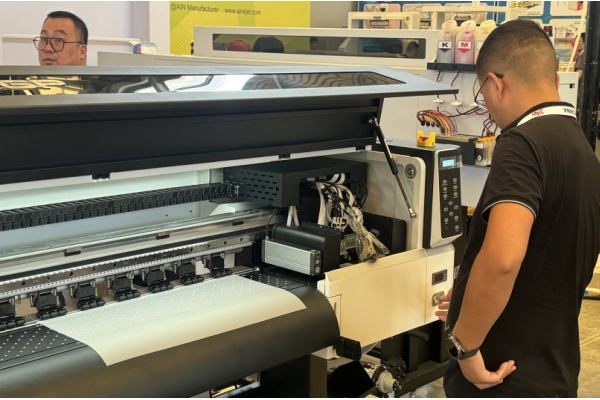
The textile industry has seen rapid shifts over the last decade, but few technologies have disrupted the market quite like Direct-to-Film (DTF) printing. As we move through 2026, DTF has evolved from a "new trend" into the primary solution for custom apparel businesses worldwide.
In this ultimate guide, we will break down the process, the technology, and why it is the most profitable choice for your print shop this year.
DTF printing is a process where designs are printed onto a special PET film using water-based pigment inks. Once printed, a hot-melt adhesive powder is applied and cured. The final result is a high-quality transfer that can be heat-pressed onto almost any fabric.
Design & Print: Create your artwork and print it onto the PET film (usually CMYK + White).
Powdering: Apply hot-melt adhesive powder to the wet ink.
Curing: Pass the film through a dryer or oven to melt the powder.
Heat Transfer: Press the cured film onto your garment for 10–15 seconds.
Unlike DTG (Direct-to-Garment), which is mostly limited to cotton, DTF works on everything:
Cotton, Polyester, and Nylon.
Blends and Spandex (High elasticity).
Dark and light-colored fabrics.
Even hats, bags, and leather!
In 2026, customers demand longevity. Modern DTF inks and powders provide incredible wash fastness. Prints are soft to the touch but resistant to cracking or peeling, even after 50+ washes.
DTF eliminates the need for "Pre-treatment," a time-consuming and expensive step required in DTG. This makes high-volume production much faster and more cost-effective.
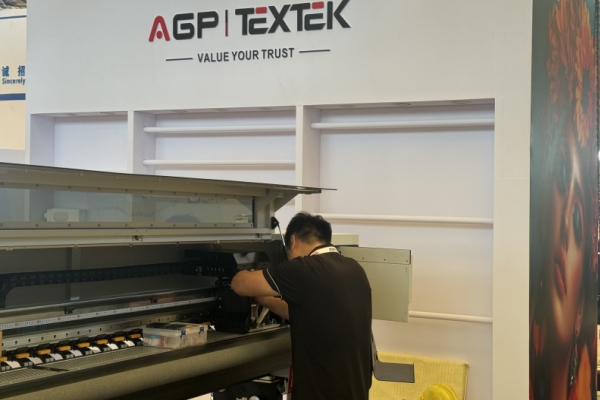
To succeed in 2026, your hardware must be reliable. Industrial-grade machines now feature:
White Ink Circulation Systems: To prevent nozzle clogging and sedimentation.
Precision Printheads: Ensuring every detail and gradient is captured.
Automated Shaker-Dryers: For seamless roll-to-roll production.
Industry Insight: Many modern shops are now looking at Hybrid UV Printers, like the Model 3040, which can print directly to PU films for specialized high-end textile applications, offering even greater color depth and durability.
At TEXTEK, we believe that quality shouldn't be a guessing game. Our manufacturing process follows strict standardized procedures:
Rigorous Quality Inspection: Every machine is tested for precision alignment and ink flow.
Secure Packaging: Ensuring your investment arrives safely, no matter where you are in the world.
Reliable Logistics: We prioritize on-time delivery so your production line never stops.
As we look deeper into 2026, keep an eye on:
Sustainable Inks: Eco-friendly, water-based inks that reduce environmental impact.
UV DTF Integration: Using UV technology to create "Crystal Stickers" for hard surfaces alongside fabric transfers.
Increased Automation: AI-driven color management and automatic contour cutting.
DTF printing is no longer the future—it is the now. Its ability to produce high-quality, durable, and versatile transfers at a low cost makes it the ultimate tool for any printing business.
Ready to upgrade your production? [Contact TEXTEK today] to find the perfect DTF or Hybrid UV solution for your business!


