
Our quality products and best service will make your business much better.
Professional . Specialized . Experienced
(English)

20
Aug
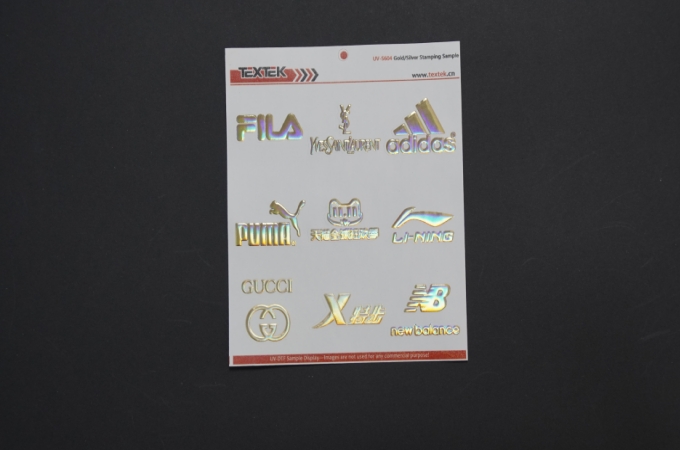
UV DTF transfers — also called UV DTF stickers or crystal labels — combine UV printing technology with the film-transfer format to produce full-color, 3D-gloss designs that bond to nearly any hard surface with no heat press required. Unlike standard DTF printing for garments, UV DTF uses UV-cured CMYK+White+Varnish ink on a two-layer AB film that is simply pressed onto the target surface and peeled. The result is a scratch-resistant, waterproof crystal label compatible with glass, metal, plastic, wood, leather, ceramic, stone, and more. This guide covers everything you need to know: how UV DTF transfers work, what makes them different from standard DTF, which surfaces they adhere to, what they can and cannot do, and how to choose the right UV DTF printer for your business.
UV DTF transfer is among the most advanced types of modern printing. It combines UV printing technology with the flexibility of the DTF film-transfer format. The process involves printing a design onto a special AB film using UV-cured inks, which are instantly solidified by ultraviolet light rather than heat or air drying. UV curing makes the design vibrant, long-lasting, and applicable to an extraordinary range of materials.
UV DTF transfers are considered the best option for printing complex designs on difficult-to-print substrates — hard, curved, textured, or non-porous surfaces that no other decoration method can reach efficiently at short-run quantities. The technology is suitable for both commercial production and custom creative applications.
The UV DTF AB Film Process — Step by Step:
The term "crystal label" comes from the visual effect: the varnish layer creates a three-dimensional gloss finish that appears to sit above the surface like a glass dome, giving designs a premium, tactile appearance that flat printing cannot replicate.
Confusion between standard DTF and UV DTF is common because both use the term "DTF" and both involve printing on film. However, they are fundamentally different technologies serving different markets:
Glass: One of the best substrates for UV DTF stickers. The smooth, non-porous surface creates a strong adhesive bond. UV DTF labels on glass are water-resistant and maintain clarity and color vibrancy. Suitable for drinking glasses, mirrors, windows, bottles, phone cases, and glass drinkware. The labels do not fade or get scratched easily on glass surfaces.
Metal: UV DTF stickers adhere well to most metal surfaces, including stainless steel, aluminum, brass, copper, and coated metals. The UV-cured adhesive bonds to the oxide layer on metal surfaces. For high-polish mirror-finish metals, light surface preparation (cleaning with isopropyl alcohol) improves adhesion. Suitable for tumblers, water bottles, tool cases, metal signage, and branded hardware.
Ceramic: UV DTF crystal labels bond effectively to glazed and unglazed ceramic. The smooth glaze surface of ceramic mugs, tiles, and plates provides excellent adhesion. Suitable for promotional mugs, custom tiles, and ceramic giftware. For dishwasher-safe applications, verify adhesion durability with wash testing.
Wood: UV DTF stickers can bond to both treated and untreated wood surfaces. The film is quite versatile — it can adapt to the grain and texture of the wood together with its adhesive properties, providing a strong bond even for outdoor applications. Suitable for wooden gifts, packaging boxes, furniture decoration, and branded wooden products.
Plastic: Most plastics are versatile and easy to apply UV DTF labels to. Their smooth surfaces are ideal for strong adhesive bonding, and UV inks do not fade quickly on plastic. Suitable for product packaging, phone cases, plastic signage, toy decoration, and promotional items. Labels are very durable on plastics for long-term use.
Leather: Leather has a slightly textured surface with moderate porosity. UV DTF stickers adhere to leather and can flex with its natural movement and bending. The adhesive accommodates leather's surface texture, preserving sticker integrity over extended use. Suitable for leather goods, wallets, bags, belts, and luxury accessories.
Stone: UV DTF transfers adhere to smooth stone surfaces, including marble, granite, and slate. Suitable for coasters, decorative tiles, memorial items, and premium gift products. Rougher stone textures may require testing — surfaces with pronounced texture may not achieve full contact with the adhesive layer.
Acrylic and resin: Acrylic panels, resin castings, and similar transparent rigid substrates are excellent UV DTF surfaces. The clarity of these materials combined with the 3D crystal label effect creates premium display and decoration products.
| Feature | UV DTF Transfer | Standard DTF (Garment) | Inkjet Label Printing | Screen Printing | Laser Engraving |
|---|---|---|---|---|---|
| Primary substrate | Hard surfaces (glass, metal, plastic, ceramic, wood) | Fabric (cotton, poly, blends) | Paper / coated vinyl | Flat fabric or rigid panels | Wood, metal, acrylic, leather |
| Application method | Cold peel-and-stick — no heat press | Heat press required (160–170°C) | Self-adhesive backing | Screen + squeegee + cure | Laser ablation — no ink |
| Full-color photo print | ✅ Yes | ✅ Yes | ✅ Yes | ⚠️ Limited color count | ❌ No color (engraved only) |
| 3D / gloss varnish effect | ✅ Crystal 3D gloss | ❌ No | ❌ No | ⚠️ With spot UV coating | ❌ No |
| Minimum order | 1 piece | 1 piece | 1 piece | 500+ (plate cost) | 1 piece |
| Water resistance | ✅ High — UV-cured ink | ✅ High — after washing | ❌ Low — paper labels | ✅ High | ✅ High — no ink to fade |
| Outdoor durability | 2–5 years on hard surfaces | 40–60+ wash cycles (apparel) | 6–12 months (laminated) | 3–5 years | Permanent |
| Fabric decoration | ❌ Not suitable | ✅ All fabric types | ❌ Not suitable | ✅ Yes | ⚠️ Leather only |
| Setup time per job | Under 5 minutes | Under 5 minutes | Under 2 minutes | Hours (plate making) | Under 10 minutes |
| No-heat application | ✅ Cold transfer | ❌ Heat press required | ✅ Self-adhesive | ❌ Cure required | ✅ No heat to substrate |
Key Takeaway: A complete UV DTF production setup requires only one machine — a UV DTF printer with integrated lamination. No heat press, no powder shaker, no curing oven. This makes UV DTF one of the lowest-infrastructure decoration methods available for print-on-demand businesses.
UV DTF Printer: The core machine. A UV DTF printer deposits CMYK + White + Varnish UV-cured ink onto Film A and laminates Film B in a single integrated pass. Key specifications to evaluate:
AB Film: Consumed per production run. Film A is the adhesive carrier; Film B is the transfer laminate. Film width must match the printer's print format. Standard AB film is available in 30 cm and 60 cm roll widths. Specialty AB films (golden, silver, holographic, glitter) are available for premium product lines.
UV DTF Ink: CMYK + White + Varnish UV-cured ink set matched to the printer's UV LED wavelength (typically 395 nm). Ink must be specifically formulated for UV DTF — standard water-based DTF ink cannot be used in a UV DTF printer.
Cutting tool: Scissors or rotary cutter for small production. For high-volume or complex contour cutting, an automatic vinyl cutter or contour cutting machine dramatically reduces finishing time and enables precise custom shapes.
Key Takeaway: The questions below address the most common points of confusion for buyers considering UV DTF printing for the first time and for operators expanding from standard DTF into UV DTF production.
What is the difference between UV DTF and standard DTF printing?
Standard DTF printing uses water-based pigment ink, hot melt TPU powder, and a heat press to transfer designs onto fabric. UV DTF printing uses UV-cured CMYK+White+Varnish ink on AB film to produce crystal stickers that cold-transfer to hard surfaces without any heat press. The two technologies share only the "film transfer" concept — their inks, films, curing systems, substrates, and application methods are all different. Do not attempt to use UV DTF ink in a standard DTF printer or vice versa.
Does a UV DTF transfer require a heat press?
No. UV DTF transfers are cold-applied. Place Film A against the target surface, press firmly by hand (or with a squeegee for larger designs), then peel Film B. The crystal label bonds permanently to the surface through the pressure-activated adhesive on Film A. This is one of the defining advantages of UV DTF over standard DTF — it can be applied to surfaces and locations where a heat press cannot be used.
How long does a UV DTF crystal label last outdoors?
UV DTF crystal labels applied to smooth hard surfaces typically last 2–5 years outdoors without significant fading, lifting, or adhesive failure, depending on the substrate, surface preparation, and environmental conditions. UV-cured inks are formulated with strong UV stabilizers and are resistant to UV light, rain, temperature cycling, and physical abrasion. Surface preparation (cleaning with isopropyl alcohol before application) significantly extends outdoor durability by ensuring full adhesive contact with the substrate.
Can UV DTF labels be applied to curved surfaces?
Yes, for surfaces with gradual curves (tumblers, round bottles, cylindrical containers). The AB film is flexible enough to conform to moderate curvature. For best results on cylindrical surfaces, apply the label in sections or pre-curve the film before application to prevent air bubbles and edge lifting. Very tight curves (small-diameter pens, narrow tubes) may require smaller label sizes to achieve full contact across the curved surface.
What is the varnish layer in UV DTF ink and why is it important?
The varnish channel in UV DTF ink (the "V" in CMYK+W+V) is a clear UV-cured coating that is printed on top of the color and white layers. It serves two functions: first, it creates the signature 3D crystal gloss effect that gives UV DTF labels their distinctive raised, lens-like appearance; second, it provides a protective clear coat over the color layers that significantly improves scratch resistance, chemical resistance, and UV stability. Without the varnish layer, UV DTF prints would appear flat and would be more vulnerable to surface abrasion.
What specialty UV DTF films are available?
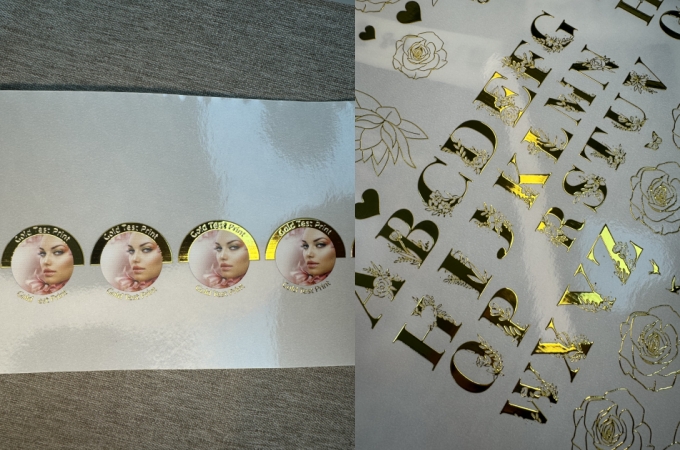
Beyond standard clear AB film, specialty UV DTF films are available to produce premium decorative effects without additional equipment: golden metallic film (mirror gold finish), silver metallic film (mirror silver finish), holographic glitter film (rainbow color-shifting iridescent effect), and pillar light film (prismatic light dispersion effect). All specialty films are compatible with standard UV DTF printers and UV-cured inks. The specialty film replaces the standard AB film in the printer — no hardware changes are required. These films command premium pricing and create differentiated product lines for gift, promotional, and luxury decoration markets.
Can I use a UV DTF printer for both crystal labels and standard vinyl stickers?
A UV DTF printer is specifically designed for AB film crystal label production. It can also print onto vinyl label rolls if the vinyl is coated for UV ink adhesion — this allows the same machine to produce both crystal labels and flat vinyl labels. Switching between media types requires changing the roll and adjusting RIP settings; no hardware modifications are needed. This dual-media capability makes a UV DTF printer a versatile single-machine solution for most sticker and label businesses.
Is UV DTF printing environmentally friendly?
UV DTF printing is more environmentally considerate than many alternative decoration methods. UV-cured inks cure instantly with no solvent evaporation, generating near-zero VOC emissions during production. UV LED lamps consume significantly less energy than mercury arc lamps (up to 80% less) and contain no mercury. The AB film process produces no waste powder (unlike standard DTF) and no chemical pretreatment solutions. UV DTF ink waste is minimal because the printing process is on-demand with no setup waste.
UV DTF transfers — crystal labels produced on AB film with UV-cured CMYK+White+Varnish ink — represent the most substrate-versatile, setup-efficient, and visually distinctive decoration method for hard surfaces available today. No other single technology combines full-color digital printing, cold peel-and-stick application, no minimum order, 3D gloss crystal effect, and 2–5 year outdoor durability in one workflow.
For print shops already operating standard DTF printers for garment decoration, UV DTF is the natural expansion path into hard-surface product personalization — adding tumblers, mugs, phone cases, packaging, and branded accessories to the product catalog without requiring a separate heat press or laminating line.
Textek's UV DTF printer range — from the compact A3-format UV-F30 to commercial 60 cm roll systems — includes integrated Film B lamination, Epson I3200-U1 UV-rated printheads, and compatibility with the full range of specialty AB films (golden, silver, holographic, glitter). For specifications, sample prints, and configuration guidance, visit textek.cn.


