
Our quality products and best service will make your business much better.
Professional . Specialized . Experienced
(English)

13
Mar
The decision between a flatbed UV printer and a hybrid UV printer is one that countless business owners face when investing in digital printing equipment. With the global industrial UV printer market projected to exceed 5.4 billion USD in 2026, the demand for versatile printing solutions has never been higher
This comprehensive guide from TEXTEK walks you through everything you need to know about flatbed and hybrid UV printers, providing a detailed technical comparison to help you make an informed decision based on your specific business requirements.
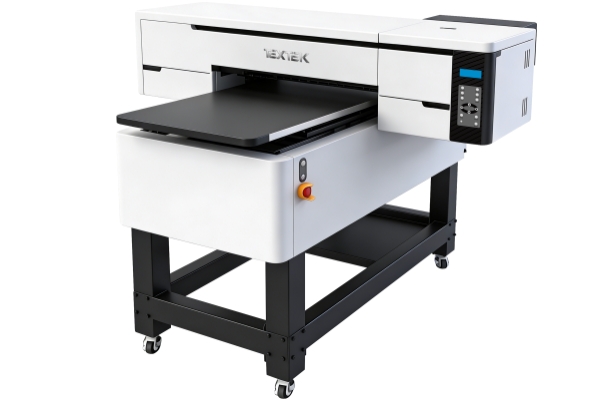
A flatbed UV printer represents the cornerstone of direct-to-substrate digital printing. These machines feature a large, flat platform where materials are placed directly for printing. The print head moves across the surface, depositing UV ink which instantly cures upon exposure to UV light, creating a durable, vibrant image that bonds effectively with a wide variety of rigid materials
One of the most compelling aspects of flatbed UV printer technology is its versatility in handling diverse substrates. These machines excel at printing on glass, ceramic tiles, metal sheets, aluminum composites, acrylic, PVC, foam board, corrugated plastic, wood, and countless other rigid materials. This broad media compatibility has made flatbed printers the preferred choice for businesses specializing in custom signage, promotional products, interior decoration, and industrial part marking.
The vacuum system integrated into flatbed printers plays a crucial role in ensuring print quality and consistency. By securely holding materials in place during the printing process, vacuum beds eliminate vibration and movement that could compromise image sharpness or color accuracy. This is particularly important when printing on heavier substrates or when producing detailed, high-resolution graphics where precise dot placement is essential.
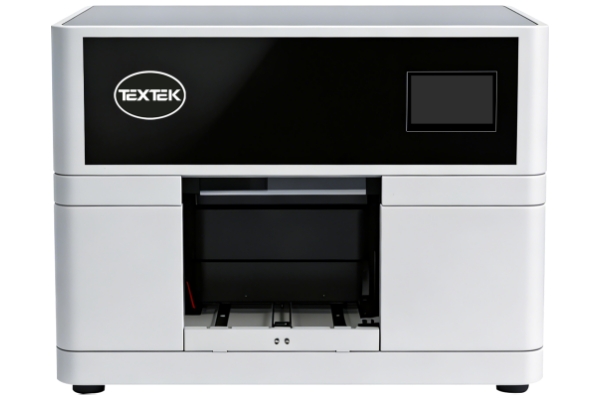
Hybrid UV printers represent the evolution of printing technology by combining the capabilities of both flatbed and roll-to-roll systems into a single, versatile machine. These advanced devices can handle both rigid materials and flexible roll substrates, making them an ideal solution for businesses that require maximum flexibility without investing in multiple specialized machines
For businesses considering expansion into new market segments, hybrid printers provide an excellent pathway to growth without significant additional investment. The ability to handle both substrate types means that as customer demands evolve, the printer can adapt to meet those needs rather than becoming obsolete or requiring costly upgrades.
When evaluating flatbed versus hybrid UV printers, understanding the technical capabilities of each technology is essential for making the right choice for your business applications. Both printer types have evolved significantly in recent years, with 2026 models offering impressive advancements in speed, precision, and ink compatibility.
Flatbed UV printers generally offer superior performance for printing on truly rigid materials. The fixed, stable bed provides an ideal printing surface for heavy or thick substrates that might cause issues with roll-fed systems. Industrial flatbed printers can achieve remarkable production speeds, with some high-speed models capable of producing over 200 square meters per hour
Hybrid printers, while slightly more complex mechanically, offer comparable quality on rigid substrates while adding the crucial ability to process flexible materials. The roll-to-roll capability enables continuous, unattended production runs for banners and other long-format graphics, significantly improving overall productivity for high-volume jobs. Modern hybrid printers in 2026 feature quick-changeover systems that allow operators to switch between flatbed and roll modes within minutes, minimizing downtime between jobs.
Both printer types support advanced color configurations, including CMYK plus white for printing on dark substrates, and many models offer additional channels for specialty inks such as varnish, fluorescent colors, or primers for enhanced substrate adhesion. The choice between flatbed and hybrid depends on the mix of materials you expect to print most frequently.
Understanding where each printer technology excels is crucial for selecting the right machine for your specific business model. Different applications have distinct requirements that align better with either flatbed or hybrid printing technology.
Flatbed UV printers are ideally suited for businesses whose primary work involves rigid substrates and custom one-off or short-run productions. Custom gift shops benefit enormously from flatbed technology, as these machines can handle everything from phone cases and promotional items to awards, trophies, and personalized keepsakes. The ability to place objects directly on the bed and print without any pre-treatment or transfer process makes flatbed printers perfect for boutique customization operations.
Signage companies that focus primarily on rigid displays, dimensional signs, and point-of-purchase materials will find flatbed printers to be an excellent investment. The ability to print on materials up to 90mm thick opens possibilities for creating thick, durable signs that stand out from traditional flat graphics.
Hybrid UV printers, on the other hand, are the clear choice for businesses that regularly work with both rigid and flexible materials. Full-service sign shops that produce everything from rigid building signs to flexible vehicle wraps and banners require the versatility that only a hybrid can provide.
Textile and fabric printing businesses will find hybrid printers essential for producing custom fabric designs for fashion, home décor, and promotional applications. The roll-to-roll capability enables continuous printing on fabric rolls, while the flatbed mode can handle finished fabric pieces or rigid textile products like ceramic tiles with fabric textures.
Packaging companies and commercial printers serving varied client needs also benefit significantly from hybrid technology. The ability to quickly switch between cardboard packaging prototypes and promotional materials on vinyl or film provides operational flexibility that can attract a broader customer base and increase revenue streams.
The financial aspect of purchasing a UV printer extends beyond the initial machine cost. It requires careful consideration of the total cost of ownership, expected return on investment, and long-term business growth potential. Understanding these factors will help you make a decision that aligns with your financial goals and business strategy.
Entry-level flatbed UV printers suitable for small businesses and custom gift shops typically start around $5,000 to $15,000 for desktop models, while mid-range production flatbeds can range from $20,000 to $60,000. Industrial-grade flatbed printers with large bed sizes and advanced features can exceed $100,000.
Hybrid printers generally fall in the mid-to-high price range due to their added functionality and more complex mechanical systems. However, when considering the alternative of purchasing separate flatbed and roll-to-roll printers, a hybrid often represents significant cost savings. Additionally, the ability to take on a wider range of jobs can accelerate ROI by capturing more business opportunities.
Beyond the initial purchase price, ongoing operational costs include UV inks, maintenance, substrate materials, and energy consumption. Both printer types use UV-curable inks that are more environmentally friendly than traditional solvent inks, which aligns with increasingly strict environmental regulations across Europe, North America, and Asia.
The UV printing industry continues to evolve rapidly, with technological advancements promising even greater capabilities and efficiencies in the years ahead. Understanding these trends can help you select a printer that will remain relevant and valuable as your business grows.
The 2026-2028 horizon for industrial UV printer development centers heavily on integration and automation. Artificial intelligence predictive diagnostics, IoT fleet management, and energy-efficient UV-LED curing are becoming standard features across premium models.
Industry forecasts suggest that hybrid printers may dominate future market growth due to their multipurpose flexibility. As businesses increasingly seek equipment capable of handling diverse substrates and adapting to changing market demands, the versatility of hybrid technology becomes a significant competitive advantage. However, flatbed printers will continue to remain essential for applications requiring maximum precision on rigid substrates.
When investing in UV printing equipment, consider not just your current needs but your anticipated growth trajectory. Selecting a machine that can scale with your business and adapt to emerging market opportunities will protect your investment and ensure long-term profitability.
The choice between flatbed and hybrid UV printers ultimately comes down to understanding your specific business model, current customer demands, and future growth objectives. Both technologies offer compelling advantages, and the right choice varies significantly depending on your unique situation.
Choose a flatbed UV printer if your business focuses predominantly on rigid materials such as glass, metal, acrylic, wood, ceramic tiles, and thick plastic panels. If your primary revenue comes from custom gifts, promotional products, interior décor elements, or rigid signage, the precision and quality offered by flatbed technology will serve you exceptionally well. The direct-to-substrate approach eliminates additional processes and provides excellent image quality that meets the exacting standards of these applications.
Choose a hybrid UV printer if your business regularly handles both rigid and flexible substrates. If you find yourself frequently needing to produce banners, vehicle wraps, window graphics, fabric prints, or other roll-based applications alongside your rigid printing work, the hybrid solution provides the versatility necessary to maximize your business potential without compromise.
At TEXTEK, we understand that selecting the right UV printer is a significant business decision. Our team of experts is ready to help you evaluate your specific requirements and find the perfect printing solution for your needs. Whether you choose flatbed or hybrid technology, we offer comprehensive support, including equipment selection, installation, training, and ongoing maintenance, to ensure your investment delivers maximum value.
Contact TEXTEK today to learn more about our range of UV printing solutions and discover how we can help your business reach new heights in digital printing excellence.


