
Our quality products and best service will make your business much better.
Professional . Specialized . Experienced
(English)
16
Oct
Choosing the right Direct-to-Film (DTF) printer is an important decision for garment printing businesses, custom apparel studios, and commercial print shops. The right equipment should meet your production needs, deliver consistent print quality, and support your business as it grows.
Rather than choosing a printer based on price or advertised speed alone, evaluate the complete printing system, including printhead configuration, ink management, workflow requirements, operating costs, and after-sales support.
Here are seven key factors to consider before investing in a DTF printer.
Start by estimating how much you need to print each day and the types of orders you expect to receive. A business producing personalized T-shirts in small batches may have different requirements from a print shop handling large-volume orders.
Consider your average order size, peak-season demand, production schedule, and expected business growth. A printer that meets your current needs without creating unnecessary operating costs may be a better investment than a system designed for a much higher production volume.
Printhead configuration influences printing performance, resolution capabilities, and potential productivity. However, the number of printheads alone does not determine the final print quality or actual production speed.
When comparing DTF printers, review the supported print modes, resolution, ink configuration, and printhead model. Ask the manufacturer for representative samples and production-speed information under clearly specified printing conditions.
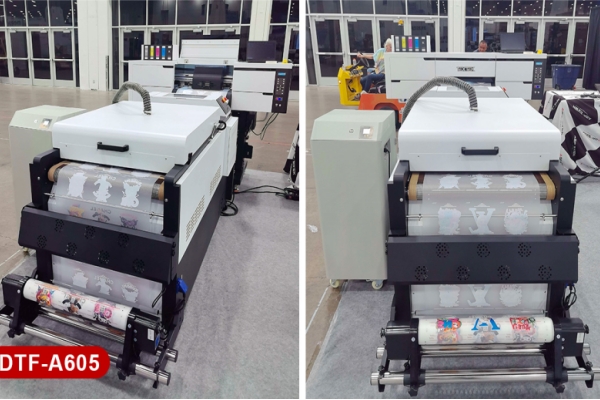
For example, TEXTEK's DTF-A602 supports Epson I3200-A1 or I1600-A1 printhead configurations. Compare the available configurations against your required output and budget before making a decision.
A DTF printer is only one part of the production process. Depending on the system, your workflow may also require a powder shaker, curing unit, heat press, RIP software, and compatible consumables.
Evaluate how these components work together. A well-matched workflow can help reduce manual handling, improve production consistency, and make it easier to manage larger orders.
Before purchasing, confirm which components are included, which must be purchased separately, and whether the equipment fits your available workspace.
White ink management is an important consideration in DTF printing because pigment particles can settle during operation or periods of inactivity. Maintenance requirements vary by printer design and ink system.
Ask the manufacturer about white ink circulation, recommended maintenance routines, printhead cleaning procedures, and instructions for extended periods of non-use.
Also consider how easily routine maintenance can be performed and whether replacement parts and technical guidance are available. Clear maintenance procedures can help reduce avoidable downtime and protect your investment.
The purchase price is only one part of the cost of operating a DTF printer. Your budget should also account for ink, transfer film, adhesive powder, electricity, maintenance, replacement parts, labor, and potential downtime.
When comparing models, use realistic production estimates rather than relying only on the lowest advertised price or highest stated speed.
Consider how much usable output you need, how frequently you expect to operate the machine, and whether the expected production volume can justify the investment.
RIP software plays an important role in color management, white ink settings, layout preparation, and print-job processing. Before purchasing, confirm that the printer supports the software and operating system used by your business.
Check the available software options, file-format support, network or connection requirements, and the technical assistance provided during setup.
If you already use a particular RIP workflow, ask the manufacturer to confirm compatibility before placing an order.
Reliable technical support is particularly important when a printer is used for commercial production. Even a well-maintained system may occasionally require troubleshooting or replacement parts.
Before choosing a supplier, ask about installation guidance, operator training, troubleshooting procedures, warranty coverage, spare-parts availability, and response times for technical inquiries.
For distributors and resellers, also evaluate whether the manufacturer can provide product training, technical documentation, and ongoing support for your customers.
The best DTF printer is the one that matches your application, production requirements, available budget, and long-term business plans.
A compact system may suit a smaller customization operation, while a higher-capacity configuration may be more appropriate for a business managing larger or more frequent orders. Compare the complete workflow and ongoing costs before making your final decision.
Explore TEXTEK DTF-A602 DTF Printer to review its available printhead configurations and specifications.
If you are looking for a DTF printing solution for your business or distribution market, contact TEXTEK to discuss your application and production requirements.
Start with your expected production volume, application, available workspace, and budget. Then compare print quality, printhead configuration, workflow requirements, maintenance, and technical support.
No. Advertised speeds may be measured using different resolutions and print modes. Compare output under equivalent conditions and choose a printer that meets your actual production requirements.
A typical DTF workflow uses a DTF printer, compatible ink and transfer film, adhesive powder, a curing system, and a heat press. The exact equipment depends on the printer configuration and production workflow.
Technical support can help users install equipment, troubleshoot print-quality issues, maintain the printer, and reduce avoidable downtime. Spare-parts availability and clear maintenance guidance are also important for commercial operations.


