
Our quality products and best service will make your business much better.
Professional . Specialized . Experienced
(English)

04
Mar
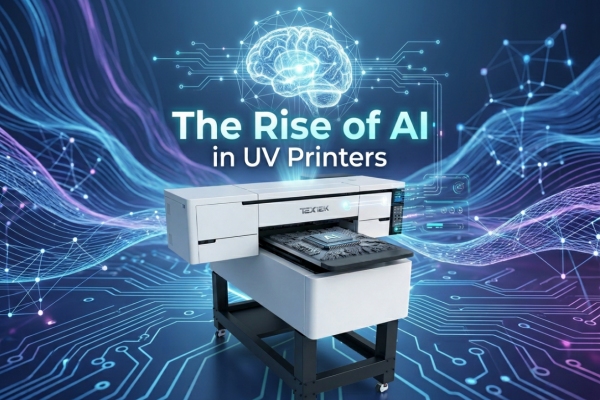
Artificial intelligence is fundamentally transforming the UV printing landscape, introducing intelligent automation that enhances quality, efficiency, and operational capabilities across the industry. As print service providers seek competitive advantages in an increasingly demanding market, AI-powered UV printers are emerging as game-changing solutions that address longstanding challenges while unlocking new possibilities. This comprehensive guide explores the cutting-edge AI innovations revolutionizing UV printing technology, examining how leading manufacturers are integrating intelligent systems to deliver superior print quality, predictive maintenance, and streamlined workflows. Whether you are a print shop owner evaluating new equipment or an industry professional interested in understanding where the technology is heading, this article provides valuable insights into the smart printing revolution that is reshaping the UV printing industry.
Artificial intelligence in the UV printing context refers to intelligent systems that can learn from data, make decisions, and automate complex processes without constant human intervention. Unlike traditional printing equipment that follows predetermined settings, AI-enabled UV printers can adapt to changing conditions in real-time, optimizing print quality and operational efficiency simultaneously. The integration of these smart technologies represents a significant evolution from the automated systems of previous generations, where equipment could perform set tasks but could not learn, adapt, and optimize based on accumulated experience and real-time feedback.
The printing industry has witnessed a notable shift in recent years, moving from equipment and software automation toward genuine AI integration that enters the strategic lens of business operations. This transition marks a fundamental change in how printing companies approach their production workflows, quality control, and maintenance scheduling. Print service providers are increasingly recognizing that AI is no longer a luxury feature but a competitive necessity in an industry where margins depend on efficiency, quality consistency, and minimized downtime.
HP emerged as a pioneer in printing AI with the introduction of HP Print AI at their Imagine 2024 event. This intelligent print experience leverages artificial intelligence to modify the printing process from setup to support, fundamentally changing how users interact with their printing equipment. The system uses AI to analyze print jobs, automatically adjusting settings for optimal results based on the specific substrate, ink type, and desired output quality. HP describes Print AI as the industry's first intelligent print experience covering home, office, and large format printing, representing a comprehensive approach to AI integration across different printing segments.
The Perfect Output feature, currently available through an exclusive beta program for select customers, demonstrates how AI can solve persistent printing challenges. This technology intelligently processes web content for printing, removing unwanted elements like advertisements and blank spaces while preserving the essential content. HP Scan AI Enhanced, another component of this ecosystem, automatically enhances scanned documents by straightening, cropping, and optimizing color balance without user intervention. The company plans to continue launching additional HP Print AI capabilities throughout 2025 and beyond, indicating a sustained commitment to AI development in their product line.
Canon has been at the forefront of integrating intelligent automation into their large format UV flatbed printers, with the Arizona series representing a significant leap forward in smart printing technology. The Arizona 135 GT, launched in 2021, exemplifies Canon's commitment to combining advanced imaging technology with intelligent automation, offering true flatbed versatility at an exceptional price point with features designed for both established print service providers and those entering the wide format printing market. This printer incorporates VariaDot grayscale printing technology, which uses advanced drop size selection techniques to deliver photo-realistic images while consuming up to 50% less ink than comparable flatbed printers using fixed droplet inkjet technology.
Canon's Arizona series of large format UV flatbed printers has incorporated several intelligent features that enhance productivity and ease of use. The FLXflow technology, introduced in March 2024 for the Arizona 2300 series, represents a significant advancement in substrate handling and print optimization. This technology requires less masking and underlays to hold media in place compared with legacy Arizona models, helping to reduce media waste and improve operational efficiency. The system uses advanced vacuum technology that moves a greater volume of air than conventional pumps, enabling better substrate hold-down and more consistent print quality across the entire print bed.
The FLXflow Float functionality allows users to move heavier and irregular-sized media faster and more easily around the table by pushing air from the table upwards to create a cushion. This feature significantly reduces, enabling the easy positioning of heavy or challenging substrates while reducing the risk of media damage or waste when handling challenging substrates. Combined with PRISMA Service, which provides predictive maintenance and facilitates authorized remote assistance by qualified service technicians, these intelligent features help maximize uptime and reduce unexpected downtime. The Advanced Image Layout Controls allow operators to make last-minute substrate choices needed to respond quickly to changes in board material availability, helping to use leftovers and reduce waste while providing more flexibility and cost efficiencies.
Epson has also made significant strides in intelligent UV printing with the SureColor V7000, which automatically detects and adjusts to accommodate media up to 3.14 inches thick, eliminating the need for manual height adjustments and ensuring optimal print quality across varying substrate thicknesses. This automatic thickness detection technology represents a significant advancement in simplifying workflow processes for print operators, allowing them to focus on creative aspects rather than technical setup procedures.
Roland DG has also been actively integrating AI and automation technologies into its printing solutions. Industry experts note that AI doesn't provide the right answer but rather the most likely answer based on patterns in its training data, making it particularly valuable for repetitive tasks where consistency matters. The company's approach focuses on using AI to streamline workflow processes and reduce the learning curve for operators while maintaining the high-quality output that professional print service providers require.
One of the most valuable applications of AI in UV printing is predictive maintenance, which can significantly reduce unexpected equipment failures and costly downtime. Modern AI-powered systems continuously collect data from key printer components, including heated beds, fans, motors, and other critical systems, using machine learning algorithms to predict when maintenance will be needed before failures occur. This proactive approach to maintenance allows print service providers to schedule service during planned downtime rather than dealing with emergency repairs that disrupt production and customer relationships.
The economic impact of predictive maintenance extends beyond simply avoiding repair costs. When a UV printer goes down unexpectedly, the ripple effects can include missed deadlines, rushed reprints at additional cost, and potential damage to client relationships. AI-powered predictive maintenance helps ensure that printers remain operational when they are needed most, supporting the reliability that commercial printing operations require to maintain their reputation and profitability.
AI technologies are also transforming quality control in UV printing operations. Automated inspection systems can analyze print output in real-time, detecting defects that might escape human notice and making immediate adjustments to maintain consistent quality throughout a print run. These systems can identify issues such as color inconsistencies, banding, misregistration, and ink density variations, alerting operators to problems before they result in wasted materials and time.
The automation of workflow processes represents another significant advancement enabled by AI. From automatic file preparation and preflight checks to intelligent job scheduling that optimizes production efficiency, AI-powered systems are reducing the manual labor required to manage print operations. This automation not only saves time but also reduces the potential for human error, improving overall output quality and consistency.
One of the most exciting developments in AI-powered UV printing is the integration of vision systems that can automatically detect and respond to substrate characteristics. Modern flatbed inkjet printers now use integrated camera systems to deliver unmatched precision, combining high-resolution imaging, AI analysis, and automated control to minimize human intervention and maximize print fidelity. These integrated vision systems detect substrate edges and surface variations, enabling real-time adjustment of print paths to correct for warping or misalignment with remarkable accuracy.
AI vision systems work through advanced image processing algorithms that allow printers to detect and correct registration errors in real-time. By capturing high-resolution images of the printed substrate, these systems analyze the position of colors and layers, offering adjustments that enhance the final output. Modern vision systems can scan through substrates incredibly fast, picking up edges, spotting surface flaws, and finding registration marks within just a few thousandths of a second. These systems automatically adjust for loading shifts that might be off by plus or minus 3mm, eliminating the need for manual measurement and alignment.
Automatic height detection represents another significant advancement in smart UV printing technology. The LogoJET UVx40R PLUS-SE, for example, features an automatic height sensor that detects products up to 5 inches in height and positions them at an optimal distance from the print head. This technology ensures accurate nozzle distance, prevents ink splashing, guarantees print quality, and supports high-speed printing without operator intervention. Similarly, AI visual positioning systems ensure high-speed, precise scanning with zero error, preventing misalignment and improving production efficiency.
The results speak for themselves: this workflow achieves first-pass success rates exceeding 98% across mixed substrate batches, compared to just 76% with manual setup according to Industrial Print Consortium 2024 data. Reduced waste, fewer defective prints, and streamlined operations contribute directly to a healthier bottom line for print service providers. These AI vision systems are versatile and can adapt to different substrates, making them ideal for businesses that work with multiple materials or print unique designs on demand.
The UV printer market's projected growth from USD 1.44 billion in 2024 to USD 1.92 billion by 2033 reflects the industry's expansion and the increasing demand for advanced printing capabilities. This growth is being driven by several factors, including the rising adoption of UV-LED technology, which captured approximately 64.78% of the market share in 2024, and the growing demand for customization across various applications. The integration of AI into UV printing equipment aligns with these broader industry trends, offering print service providers the advanced capabilities they need to meet evolving customer expectations.
Print service providers are becoming increasingly creative and daring, producing exciting new applications on a greater variety of substrates. This creative expansion requires intelligent printing solutions that can handle diverse materials and adapt to varying requirements without extensive manual intervention. AI-powered UV printers are uniquely positioned to support this creative evolution, providing the flexibility and intelligence needed to explore new application areas while maintaining the quality and efficiency that commercial operations demand.
Looking ahead, the role of AI in UV printing is expected to expand significantly as manufacturers continue to develop new applications for intelligent technology. The printing industry is just beginning to explore the potential of AI, with many experts predicting that the technology will become increasingly integral to print operations in the coming years. From more sophisticated predictive maintenance to advanced color management and automated job optimization, AI promises to unlock new levels of efficiency and capability in UV printing.
The integration of AI with other emerging technologies, such as IoT connectivity and cloud-based production management systems, will further enhance the intelligence of UV printing operations. These connected ecosystems will enable remote monitoring, automated supply ordering, and seamless integration with broader production workflows, creating printing operations that are more intelligent, efficient, and responsive to market demands than ever before.
The rise of AI in UV printing represents a fundamental shift in how printing technology supports commercial operations. From HP Print AI to Canon's smart Arizona printers and the innovative solutions emerging from other manufacturers, artificial intelligence is becoming an essential component of modern UV printing equipment. As these technologies continue to evolve and mature, print service providers that embrace AI-powered solutions will be better positioned to deliver high-quality output, maximize equipment uptime, and meet the increasingly demanding requirements of their customers. The future of UV printing is intelligent, automated, and increasingly driven by the power of artificial intelligence.


