
Our quality products and best service will make your business much better.
Professional . Specialized . Experienced
(English)

03
Dec
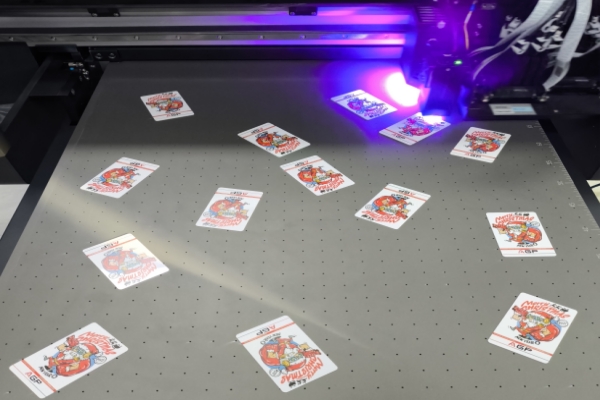
Amidst intensifying industrial homogenization and the relentless advancement of automation technology, the printing industry faces dual pressures: "cost reduction and efficiency enhancement" alongside "quality assurance." As a pioneer in visual printing solutions, TEXTEK is committed to overcoming this industry bottleneck. By deeply integrating high-precision CCD vision positioning systems with the efficient printing capabilities of UV curing technology, its innovative solutions have gained widespread recognition across numerous application fields.
UV vision printing represents an advanced manufacturing system that deeply integrates machine vision technology with ultraviolet (UV) curing printing. Through high-precision image recognition, real-time positioning, and intelligent control, this technology enables precise printing on objects at any position and angle without requiring physical molds or manual alignment. This approach delivers a revolutionary upgrade to production models within the printing industry.
Before delving into camera systems, we must first clarify the core concept of UV vision-based positioning in printing. This innovative approach combines UV-curable inks with cutting-edge vision technology to achieve exceptional print quality and production efficiency. "Vision positioning" specifically refers to the printer's core capability to adapt to the unique contours of different materials, precisely placing images or patterns onto substrate surfaces.
The heart of a vision-guided UV printing system lies in its camera system—the "eyes" that enable the printer to identify substrates, achieve precise alignment, and adapt to substrate characteristics. In industrial printing, precision is paramount to product value. The camera system supports high-precision production through three key functions:
Accurate Registration: Real-time calibration of the printhead's relative position to the substrate ensures consistent, precise results in every printing cycle.
Real-Time Monitoring: High-definition cameras provide instant feedback during printing, enabling rapid adjustments for issues like color deviation or positional shifts.
Quality Control: Integrated camera systems automatically detect defects like misalignment and color discrepancies, ensuring final products meet stringent quality standards.
TEXTEK's CCD vision positioning system achieves full automation from substrate recognition to precise printing through a four-step closed-loop process, operating as follows:
The CCD camera mounted on the printer performs a comprehensive scan of the substrate surface placed on the printing platform, accurately capturing the substrate's actual position, contour, and any existing marks or pre-printed patterns on its surface.
The image processing unit compares the scanned substrate data with the preset printing design, precisely identifying any potential misalignment between the substrate's actual position and the intended layout.
The system transmits the analyzed offset data to the printer control unit. Through intelligent algorithms, it dynamically adjusts the print head's movement trajectory and printing parameters in real time, ensuring the print head remains precisely aligned with the substrate at all times.
After completing alignment calibration, the printer initiates the formal printing process. Simultaneously, the camera system continuously monitors the entire printing process to ensure alignment accuracy remains stable throughout the production cycle.
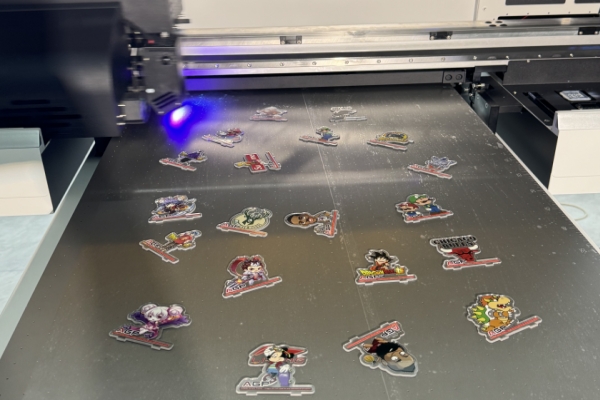
Integrating precision camera systems into UV printing workflows delivers multidimensional production value enhancements for enterprises, manifested in the following three aspects:
The core advantage of the camera system lies in its ability to instantly adapt to substrate surface characteristics. Whether dealing with irregular substrates, flexible materials, or irregularly shaped workpieces, it achieves precise positioning of printed patterns, significantly reducing production defects caused by misalignment errors.
Precise alignment minimizes material waste, while automated quality inspection reduces manual inspection costs. This dual optimization substantially cuts expenditures on material loss and labor input, thereby boosting overall profitability.
Real-time adjustment and dynamic monitoring functions streamline printing workflows, ensuring equipment consistently operates at peak efficiency.
Different camera systems serve distinct functions in UV vision-guided printers, adapting to varied production scenarios. Below are the core characteristics and application advantages of three mainstream camera systems:
CCD cameras, renowned for their high sensitivity and superior imaging quality, remain the mainstream choice in UV printing systems, particularly suited for scenarios demanding stringent precision. Their core advantages include:
High Resolution: Captures detailed substrate images, providing data support for precise positioning;
Low Noise: Generates clear images even in low-light conditions, minimizing background noise interference with positioning accuracy.
CMOS cameras are gaining widespread adoption in the UV printing industry due to their speed, low power consumption, and cost-effectiveness, making them particularly suitable for businesses with limited budgets or high-speed production requirements:
Rapid Processing: Fast image capture speed meets real-time positioning demands of high-speed printing production lines;
Cost Advantage: Lower cost compared to CCD cameras, reducing equipment investment barriers for businesses.
Line scan cameras are specifically designed for high-speed, large-area printing scenarios, particularly suited for continuous roll-to-roll UV printers. Their core advantages include:
Ultra-high speed: Capable of continuously scanning moving substrates, enabling rapid printing on large-area materials;
No motion blur: Captures sharp images even on dynamic substrates, preventing positioning errors caused by substrate movement.
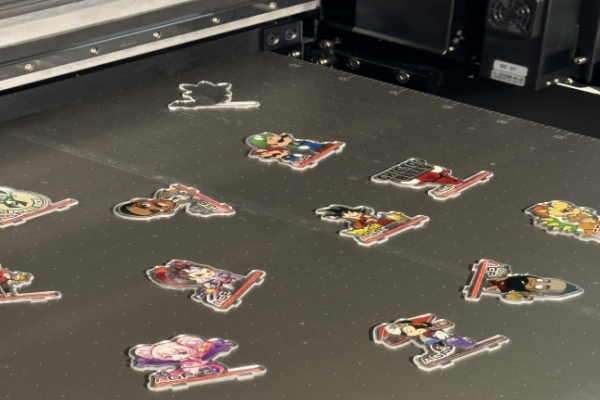
As technology continues to evolve, the application of camera systems in UV printing will deepen. Three key future development directions warrant attention:
By incorporating AI algorithms to enhance image processing capabilities, systems will achieve intelligent recognition and adaptive adjustments for complex substrates and dynamic interference. This enables printing systems to develop "autonomous decision-making" capabilities, further reducing the need for manual intervention.
Sensor resolution will be further enhanced while noise control technology is continuously optimized. This enables the capture of finer substrate features, achieving micron-level or even nanometer-level positioning accuracy to meet higher-end printing demands (e.g., electronic component printing).
Future camera systems will evolve toward "smaller footprint, stronger performance," featuring more compact integrated solutions that seamlessly embed into existing printer structures. This enables enhanced overall printing efficiency and precision without increasing equipment footprint.
CCD vision positioning systems have become a revolutionary technology in the UV printing industry due to their high precision, versatility, and efficiency. By enabling automated alignment and real-time dynamic adjustments, they fundamentally resolve core challenges in complex printing tasks. Whether in personalized product customization, high-precision electronic printing, or creative design printing, UV printers equipped with CCD vision positioning systems represent a critical investment for enhancing product quality and production efficiency.
As industry technology continues to advance, vision positioning will become standard equipment for UV printing. For enterprises, proactively adopting advanced camera technology not only secures a competitive edge in today's market but also lays a solid foundation for undertaking more sophisticated and complex printing projects in the future, achieving the production goal of "precision and perfection in every print."
In summary, the role of camera systems in UV vision-guided printing is both critical and transformative—by enhancing precision, optimizing processes, and ensuring quality, they establish new production standards for the printing industry. For companies seeking to upgrade their printing capabilities and overcome development bottlenecks, investing in advanced camera technology has become an indispensable strategic choice.


