
Our quality products and best service will make your business much better.
Professional . Specialized . Experienced
(English)

18
Aug
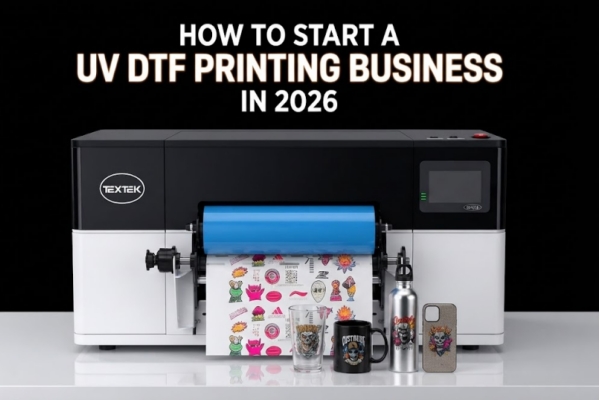
Quick answer: Starting a UV DTF printing business in 2026 requires three things: a UV DTF printer with integrated AB film lamination ($1,800–$12,000 depending on format), a source for AB film and UV ink consumables, and a target product niche — tumblers, drinkware, packaging labels, or branded merchandise. The business model works because UV DTF produces full-color crystal labels at a consumable cost of $0.15–$0.60 per label that sell for $2–$15 each, generating gross margins of 70–85%. This guide covers the complete setup process, real cost breakdowns, the most profitable product niches, common application mistakes, and how to price your work for sustainable profit.
A UV DTF printing business produces custom crystal labels — also called UV DTF stickers or UV DTF transfers — by printing UV-cured CMYK+White+Varnish ink onto a two-layer AB film and cold-transferring the resulting design to virtually any smooth hard surface. No heat press is required. The customer presses the label down, peels off Film B, and the crystal-clear design bonds permanently to their tumbler, mug, phone case, packaging box, or dozens of other surfaces.
The reason UV DTF businesses are growing rapidly in 2026 is straightforward: the product is visually distinct, the barrier to entry is low relative to other printing technologies, and demand is being driven from multiple directions simultaneously. Custom drinkware has exploded as a gifting category on Etsy and Amazon Handmade. Brand packaging now routinely uses premium crystal labels as a cost-effective luxury finish. And the promotional products industry has adopted UV DTF as a standard method for short-run branded merchandise decoration.
What makes UV DTF particularly attractive as a business entry point is the absence of the two biggest operational burdens in standard DTF printing: there is no heat press required for application, and there is no hot melt powder to manage. The production workflow is genuinely simpler — print the AB film, laminate Film B, cut to shape, ship to customer or apply on-site. A single operator running a compact A3 UV DTF printer can fulfill 50–150 orders per day depending on design complexity and order size.
One of the clearest advantages UV DTF has over standard DTF from a business-launch perspective is the shorter equipment list. Here is what you actually need:
| Equipment / Cost Item | A3 Compact Setup | 60 cm Commercial Setup | Notes |
|---|---|---|---|
| UV DTF Printer (with integrated lamination) | $1,800–$4,500 | $6,000–$12,000 | Must include AB film lamination in same pass; Epson F1080 or I3200-U1 UV printhead preferred |
| UV DTF Ink (CMYK + White + Varnish) | $200–$400 starter supply | $400–$800 starter supply | UV-cured ink; must match printer's LED wavelength (usually 395 nm) |
| AB Film rolls | $80–$150 (2–3 starter rolls) | $200–$400 (5–10 rolls) | Standard clear AB film; specialty films (gold, holographic, glitter) cost more |
| RIP Software | $200–$500 | $400–$800 | RIIN, Flexiprint, or AcroRIP; required for white and varnish channel management |
| Cutting tools | $0–$50 (scissors / rotary cutter) | $500–$2,000 (contour cutter) | Manual cutting works at startup; auto cutter needed at scale |
| Squeegee and application tools | $10–$30 | $10–$50 | For applying crystal labels to curved surfaces; cup cradle useful for tumblers |
| Total startup cost | $2,290–$5,630 | $7,510–$16,050 | No powder shaker, no curing oven, no heat press required |
Equipment prices based on factory-direct manufacturer pricing, 2026. Reseller and distributor pricing may be 15–25% higher. Freight and installation additional for commercial systems.
The no-powder-shaker advantage: In standard DTF printing, the powder shaker and curing oven add $800–$3,000 to setup cost and require significant floor space. UV DTF eliminates both. The UV LED array in the printer cures ink instantly during printing, and no additional adhesive powder is involved in the process. This makes UV DTF significantly more accessible for home-based and small-studio operations where space and capital are constraints.
UV DTF profitability is driven by the gap between consumable cost and perceived value. Here is how the cost breakdown works for the three most common UV DTF product types:
| Product Type | Approx. Size | Film Cost | Ink Cost | Total Consumable Cost | Typical Selling Price | Gross Margin |
|---|---|---|---|---|---|---|
| Small logo sticker | 2×2 inch | $0.03 | $0.04 | $0.07–$0.12 | $1.50–$3.00 | 92–96% |
| Standard crystal label | 4×4 inch | $0.08 | $0.12 | $0.20–$0.30 | $3.00–$6.00 | 90–95% |
| Tumbler wrap (full) | 9.5×8.5 inch | $0.35 | $0.45 | $0.80–$1.00 | $8.00–$18.00 | 88–94% |
| Custom tumbler (decorated) | Label + blank tumbler | $0.80 | $0.45 | $1.25–$1.80 + $6–$12 blank | $25.00–$45.00 | 60–72% |
| Packaging label sheet | A4 sheet / 12 labels | $0.25 | $0.30 | $0.55–$0.70 per sheet | $8.00–$15.00 per sheet | 91–96% |
| Holographic / specialty film label | 4×4 inch | $0.18 | $0.12 | $0.30–$0.45 | $5.00–$10.00 | 90–95% |
Consumable costs based on standard AB film at $0.40–$0.60/linear foot and UV DTF ink at $60–$80/liter. Labor not included. Margins shown are gross (revenue minus consumables only).
The decorated-product premium: Selling a finished decorated tumbler at $30–$45 generates significantly more revenue per production hour than selling raw crystal labels at $3–$6 each, despite lower gross margin percentage. A decorated tumbler requires 3–5 minutes of labor (application, quality check, packaging) and sells for 4–6× the label price alone. Most profitable UV DTF businesses combine both — selling labels to other decorators and selling finished decorated products to end consumers.
1. Custom Tumblers and Drinkware
The Stanley tumbler market and the broader insulated drinkware category have created a massive demand for custom UV DTF wraps and logo labels on tumblers, water bottles, and stainless steel cups. UV DTF is the dominant decoration method for this niche because it produces crisp full-color crystal labels that adhere reliably to curved stainless steel surfaces — something vinyl, sublimation, and inkjet methods cannot match in terms of visual effect. The customer base is wide: individuals customizing their own gear, small businesses branding customer gifts, corporate gifting programs, and event organizers. Average transaction value per order: $25–$120. Repeat purchase rate: high, as customers return for seasonal designs and gifts.
2. Brand Packaging Labels
Small and medium-sized product brands — cosmetic companies, candle makers, food producers, craft breweries, and specialty food brands — need custom labels with premium finishes for their packaging. UV DTF crystal labels are positioned as a "premium label" product with a 3D gloss effect that standard printed paper or vinyl labels cannot replicate. No minimum order quantity means a startup brand can order 25 labels for a product launch as affordably as a larger brand ordering 500. Average transaction value: $50–$400. Customer retention: extremely high once a brand is established on your labels.
3. Wedding and Event Personalization
Custom crystal labels for wedding favors (wine glasses, champagne flutes, candle jars, ceramic gifts), corporate event branded merchandise, and birthday or milestone celebration products represent a high-margin, seasonal niche with strong word-of-mouth acquisition. UV DTF labels on glassware and ceramic are the most visually impressive product in this category — guests remember the crystal effect. Average order value: $80–$500 per event order. Timeline urgency creates pricing power (rush order premiums of 20–40% are standard and expected).
4. Promotional and Corporate Branded Merchandise
Corporate buyers purchasing branded merchandise for employee gifts, trade show giveaways, and client appreciation programs represent a B2B niche with larger order values and more predictable repeat business. UV DTF crystal labels on phone cases, notebooks, drinkware, and packaging boxes deliver the premium visual quality that a standard printed sticker cannot match — and at quantities of 50–500 units, UV DTF's no-minimum-setup-cost advantage makes it more profitable than screen printing at these volumes. Average transaction value: $200–$2,000.
5. E-commerce Sticker and Label Packs
Selling UV DTF crystal sticker packs on Etsy, Amazon Handmade, or a dedicated Shopify store represents the most scalable UV DTF business model because orders are standardized, fulfillment is predictable, and digital advertising can drive consistent customer acquisition. Sticker packs (12–24 crystal labels on a theme — seasonal, sports team, animal prints, pop culture) sell for $8–$25 per pack at consumable costs of $0.70–$2.00. The economics at scale are compelling: a shop running 20 orders per day at $15 average order value generates $90,000 annually before labor and overhead.
Application quality is what separates professional UV DTF results from amateur ones. The printer and ink can be perfect, but a poorly applied crystal label will lift, bubble, or fail — and the customer will blame the product, not the application. Here is the correct protocol:
Step 1 — Surface preparation (the most overlooked step): Clean the target surface with 70% isopropyl alcohol using a lint-free cloth or paper towel. Wipe in one direction, not in circles. Allow to dry completely — 60 seconds at minimum, 90 seconds in humid conditions. Any residual oil, fingerprint, water, or dust between the adhesive and the surface creates a weak point that eventually becomes a bubble or a lifted edge. This step is non-negotiable; skipping it is the primary cause of adhesion failure.
Step 2 — Position before peeling: With Film B still in place, position the AB film on the target surface to confirm alignment. Mark the position lightly with a piece of removable tape if needed for critical placement. Adjust positioning before committing — once the adhesive contacts the surface, repositioning becomes difficult and damages the label edge.
Step 3 — Apply with squeegee from center outward: Press the AB film firmly against the surface starting from the center of the design and working outward in strokes toward each edge. This technique pushes air outward rather than trapping it in the center. Apply firm, even pressure — insufficient pressure leaves micro-gaps that become bubbles. For curved surfaces (tumblers, bottles), apply the label in sections starting at the center and pressing each section fully before moving to the adjacent section.
Step 4 — Peel Film B at 45 degrees, slowly: Peel Film B back at a 45-degree angle at a slow, steady pace — do not snap it off quickly. Slow peeling gives the adhesive time to release cleanly from Film B while maintaining full contact with the substrate. If any part of the design lifts with Film B during peeling, stop, press that section back down firmly, wait 10 seconds, and continue peeling more slowly. On curved or textured surfaces, pause and press down every few centimeters of peel.
Post-application: Allow the label to sit undisturbed for at least 2–4 hours before the surface is exposed to water, heat, or mechanical stress. Full adhesive cure takes 24 hours. For items that will be machine washed or dishwashed, the 24-hour cure period is particularly important.
| Failure Pattern | Root Cause | Fix | Prevention |
|---|---|---|---|
| Edges lifting within 24 hours of application | Surface not cleaned before application; residual oil or water | Remove label; clean surface thoroughly with IPA; re-apply with fresh label | Always clean with 70% IPA immediately before application; never touch cleaned surface with bare hands before applying |
| Air bubbles trapped under label | Application pressure insufficient; applied without squeegee from center outward | For small bubbles: press firmly from center of bubble outward with fingernail — many small bubbles disappear. For large bubbles: lift corner, re-apply with squeegee | Always use squeegee; apply center-to-edge; never press down the edges before the center |
| Label peels off completely within 48 hours | Substrate surface energy too low (certain plastics, powder-coated metals) OR surface contamination | Test a fresh label with correct IPA cleaning — if still fails, the substrate is incompatible without primer | Test on unknown substrates before committing to a production run; use UV adhesion primer on low-surface-energy plastics (PP, PE) |
| Label cracks or flakes when surface is flexed | Substrate too flexible for UV-cured crystal label; UV ink is rigid after curing | UV DTF crystal labels are not designed for flexible substrates — switch to standard DTF for flexible fabric applications | Do not apply UV DTF crystal labels to flexible plastics, rubber, or stretch materials |
| Label appears tacky or soft (not fully cured) | Printer UV LED intensity insufficient; LED aging reducing output; wrong wavelength for ink photoinitiator | Increase UV power setting in RIP; reduce print speed to increase UV exposure time; test LED intensity with UV radiometer | Check UV LED intensity monthly; replace lamps when output drops below 80% of baseline |
| Color fading at edges of label after outdoor exposure | Under-cured varnish layer not providing full UV protection; low-quality UV ink with inadequate UV stabilizers | Increase varnish layer density in RIP settings; verify varnish channel is printing correctly with a test swatch | Use quality UV ink with verified UV stabilizer content; ensure varnish coverage extends 0.5–1 mm beyond color layer boundary |
| Label won't release from Film B cleanly during peeling | Film B adhesive overexposed to heat or UV during storage; or UV ink over-cured onto Film B surface | Score the Film B edge with a pin or blade tip to start the peel; peel very slowly at 45 degrees | Store AB film in sealed packaging away from light and heat; do not leave printed AB film under UV light sources before application |
There are two legitimate approaches to UV DTF pricing, and the right one depends on your customer type:
Cost-plus pricing (for B2B and wholesale): Calculate total cost per unit (consumables + labor + overhead allocation), then apply a markup of 3–5× for retail or 2–3× for wholesale. At $0.30 consumable cost per standard 4-inch label, a 4× markup produces a retail price of $1.20 — this is typically too low and undervalues the product. Use 5–8× markup for UV DTF crystal labels because the 3D effect commands a premium that the raw cost does not reflect. Correct retail price for a 4-inch standard crystal label: $3–$6.
Market-value pricing (for B2C and e-commerce): Research what comparable crystal labels are selling for on Etsy, Amazon Handmade, and your local competitor shops. Set your price at the midpoint of the competitive range and differentiate on design quality, specialty film options, and fulfillment speed — not on lowest price. UV DTF crystal labels on Etsy routinely sell for $3–$8 per individual label and $12–$25 per pack of 4–6 labels. Custom tumbler wraps sell for $8–$20 for the transfer only and $30–$55 for a completed decorated tumbler.
The specialty film premium: Switching from standard clear AB film to holographic, gold metallic, or glitter AB film adds $0.05–$0.15 per label in consumable cost and typically justifies a 50–100% price increase on the finished label. A standard 4-inch crystal label at $4 becomes a holographic crystal label at $6–$8. Always offer specialty film options alongside your standard lineup — they dramatically increase average order value with minimal additional operational complexity.
Rush order and minimum order pricing: Establish a minimum order threshold for custom designs — typically $25–$50 minimum per order — to avoid spending design and setup time on single-item requests that are not financially viable. Charge 25–40% rush premiums for same-day or next-day fulfillment. UV DTF's fast production timeline is a genuine operational advantage that customers will pay for.
Key Takeaway: UV DTF marketing is visual-first — the crystal 3D effect sells itself when people can see it. Video content showing the Film B peel reveal on a tumbler or phone case consistently outperforms static images and is the single highest-ROI marketing investment for a new UV DTF business in 2026.
Can I start a UV DTF business from home?
Yes — UV DTF printing is one of the most home-business-friendly printing technologies available. A compact A3 UV DTF printer occupies roughly the footprint of a large desktop printer (approximately 60×50 cm), requires a standard 110–240V electrical outlet, produces no VOC emissions or hazardous waste, and generates minimal noise. The only space requirement beyond the printer itself is storage for AB film rolls (which should be kept sealed in a cool, dry area) and finished label inventory. Many successful UV DTF businesses operate entirely from a spare bedroom or garage setup.
Do I need design experience to run a UV DTF business?
Basic design literacy is helpful but not required for starting out. UV DTF printing accepts any print-ready design file (PDF, PNG, JPEG at 300 dpi). Many UV DTF business owners start by sourcing licensed design files from platforms like Creative Fabrica, Design Bundles, or Etsy (commercial-use licenses), printing them without original design work, and building design capability over time. RIP software setup — particularly white and varnish channel configuration — requires a one-time learning investment but is not ongoing design work once configured correctly for your standard use cases.
What is the difference between UV DTF and standard DTF, and which should I start with?
Standard DTF is for fabric decoration — it uses water-based pigment ink, hot melt powder, and a heat press to transfer designs onto t-shirts, hoodies, and other garments. UV DTF is for hard surface decoration — it uses UV-cured ink on AB film to produce crystal labels for tumblers, glass, metal, ceramic, and packaging. They serve different markets and require different equipment; the two technologies are not interchangeable. For a new business, UV DTF is generally easier to start with because it has a shorter equipment list, no powder management, no heat press requirement, and a product (crystal labels) that photographs exceptionally well for e-commerce and social media marketing.
How long do UV DTF crystal labels last on a tumbler?
A correctly applied UV DTF crystal label on a properly cleaned stainless steel tumbler surface typically lasts 2–5 years with normal daily use. The UV-cured ink is resistant to water, scratches, alcohol wipes, and most household chemicals. Dishwasher exposure is the primary cause of premature adhesion failure — crystal labels should be hand-washed. Labels on surfaces that are regularly exposed to high heat (placed near a stove burner, left in a hot car) may experience adhesive softening over time. In outdoor applications (signage, vehicle decoration), 2–3 year lifespan is the standard expectation under normal UV and weather exposure.
What specialty films are available for UV DTF printing and are they worth the extra cost?
Specialty UV DTF films include gold metallic, silver metallic, holographic glitter (rainbow color-shift), pillar light (prismatic dispersion effect), and transparent/clear (for a vintage see-through print look on colored surfaces). All are compatible with standard UV DTF printers and standard UV-cured ink — no hardware changes required. Specialty films cost 30–80% more per meter than standard clear AB film but typically justify a 50–100% price premium on finished labels. They are absolutely worth offering as a product tier alongside standard crystal labels: they increase average order value, differentiate your product from competitors using only standard film, and create a visual impact that customers share on social media — providing free marketing.
How do I handle a customer whose UV DTF label peeled off?
First, establish whether the failure was application-related or material-related. Ask the customer: Was the surface cleaned with alcohol before application? Was a squeegee used to press from center outward? Was the Film B peeled slowly at 45 degrees? Was the item washed within 24 hours of application? Application error is the cause of the majority of customer-reported failures and is not a product defect. Providing a clear, illustrated application guide with every order — and a short instructional video link — reduces failure rates dramatically. For genuine material failures (confirmed under-curing, adhesive delamination on a correctly applied label), replace the order without question. The consumable cost of replacement is minimal and customer retention is worth significantly more than the replacement cost.
For UV DTF printer specifications, AB film options (standard, gold, silver, holographic), UV DTF ink, and peripheral equipment, visit textek.cn or contact the Textek technical team at info@textek.cn.


